Source pin pattern rexine leather for gloves, furniture, and shoes
Explore 30 listings of pin pattern rexine leather with customizable features like embossed, printed, and glitter finishes. Buyers can compare specifications including thickness, backing types, and usage applications for gloves, furniture, and shoes.
Key considerations
Products List




Comprehensive Sourcing Guide
Strategic Sourcing Guide for Pin Pattern Rexine Leather
Understanding the Product Category and Core Attributes
When sourcing "pin pattern rexine leather," buyers are navigating a specialized segment of synthetic leather materials often referred to as PU (Polyurethane) microfiber or faux suede. The term "rexine" historically denotes a durable, coated fabric, and in modern B2B contexts, it frequently overlaps with high-performance PU leather products designed for specific tactile and functional requirements. The core keyword implies a surface texture characterized by a pin-like embossment or a specific printed pattern that mimics the grain of natural leather while offering enhanced durability.
Based on the available product data, the material composition is predominantly PU, with specific variants utilizing Faux Suede or Microfiber technical structures. The backing materials vary significantly depending on the intended application, ranging from Elastic Cloth and 100% Viscose to Imitation Cotton Velvet and Dacron. This variation in backing is critical, as it dictates the elasticity, drape, and structural integrity of the final product. For instance, an Elastic Cloth backing suggests a product designed for garments or gloves requiring stretch, whereas a Nonwoven backing is often associated with safety shoes and work boots where stability is paramount.
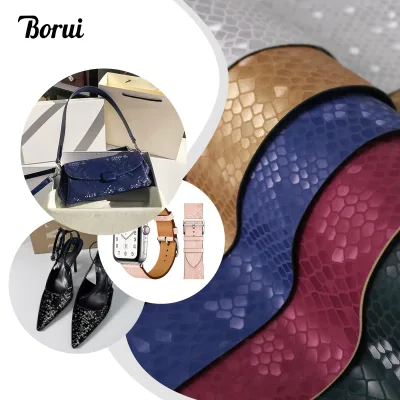
The physical specifications observed in the market indicate a thickness range typically falling between 0.6mm and 2.0mm, with specific models listing precise measurements such as 0.8mm, 1.0mm, and 1.2mm. This variability allows procurement managers to select materials that balance flexibility with abrasion resistance. The standard roll width is consistently observed at 54/55 inches, a dimension that aligns with global textile manufacturing standards and facilitates efficient cutting for large-scale production runs. The surface finish can be customized, with options including Embossed, Printed, and Glitter patterns, providing a wide aesthetic palette for designers.
Technical Specifications and Performance Metrics
Evaluating the technical specifications of pin pattern rexine leather requires a deep dive into the interplay between material composition, thickness, and functional features. The observed product attributes highlight a strong emphasis on performance characteristics such as being Waterproof, Soft, Elastic, and Abrasion Resistant. These features are not merely marketing claims but are derived from the specific layering of the PU coating and the backing technology.
Thickness is a primary driver of performance. Products with a thickness of 1.0mm or 1.2mm generally offer superior durability and are suitable for heavy-duty applications like car seats, furniture, and shoes. Conversely, thinner variants in the 0.6mm to 0.8mm range are often preferred for garments, linings, and accessories like bags and belts where drape and lightness are essential. The "Pin Pattern" itself, whether achieved through embossing or printing, adds a layer of textural complexity that can enhance grip and visual appeal.
The backing material plays an equally critical role in the technical profile. The data indicates the use of 100% Viscose backing, which offers a soft, cotton-like hand feel, and Dacron backing, which provides structural reinforcement. For applications requiring high elasticity, such as gloves or tight-fitting garments, the Elastic Cloth backing is the preferred choice. The "Hand Feeling" is described as a combination of Elastic, Soft, Smooth, and Glossy, suggesting that the surface treatment is designed to mimic the luxurious touch of premium leather while maintaining the functional benefits of synthetic materials.
Furthermore, the production standards vary by manufacturer. While some products adhere to a standard of 50 meters per roll, others specify packing standards such as 20x20x20 cm or specific weight metrics like 1kg per unit. These logistical specifications are vital for inventory planning and shipping cost calculations. Buyers must verify the exact roll length and weight for each SKU to ensure compatibility with their cutting and sewing machinery.
Compliance, Certification, and Safety Standards
In the B2B procurement of synthetic leather, compliance with international safety and environmental standards is non-negotiable, particularly for applications involving direct skin contact or use in children's products. The product data references high-confidence background information regarding REACH and RoHS certifications. While these certifications are not explicitly confirmed for every listed item in the provided text, they represent the baseline expectations for reputable suppliers in the global market.
REACH (Registration, Evaluation, Authorization, and Restriction of Chemicals) is a European Union regulation that addresses the production and use of chemical substances. For pin pattern rexine leather, compliance ensures that the PU coating and any dyes or finishing agents used do not contain restricted substances such as azo dyes or heavy metals. RoHS (Restriction of Hazardous Substances) is similarly critical, limiting the use of specific hazardous materials in electrical and electronic equipment, though its relevance to leather is often tied to the safety of the manufacturing process and the absence of toxic additives.
Buyers must explicitly request test reports and certificates of analysis from suppliers to verify these compliance statuses. The data mentions "Anti-Mildew" as a feature, which implies the inclusion of chemical treatments to prevent fungal growth. This is particularly important for products used in humid environments or for applications like car seats and home textiles. The verification of these treatments should be part of the quality control protocol, ensuring that the anti-mildew properties are durable and do not degrade over time.
Additionally, the "Microfiber" technical designation suggests a specific manufacturing process that may have its own set of environmental and safety implications. Buyers should inquire about the source of the microfiber and the adhesives used in bonding the layers. While the provided text does not list specific third-party audit results, the presence of these certifications in the background context indicates that they are standard expectations for the category. Procurement teams should treat the absence of explicit certification data as a red flag requiring immediate clarification before placing orders.
Cost Drivers and Pricing Dynamics
The pricing of pin pattern rexine leather is influenced by a complex matrix of factors, including material composition, customization levels, and order volume. The observed price range in the market spans from $0.56 to $14.90 per unit, a significant variance that reflects differences in quality, thickness, and feature sets. Lower-priced items in this range likely correspond to standard thicknesses (0.6-0.8mm) with basic backing and minimal customization. In contrast, the higher end of the price spectrum ($10+) typically correlates with specialized features such as Glitter patterns, Microfiber construction, or specific backing technologies like Dacron or Nonwoven layers designed for safety footwear.
Minimum Order Quantity (MOQ) is another critical cost driver. The observed MOQ range is extensive, spanning from 10 units to 5,000 units. This flexibility allows small businesses to sample products with low-risk orders, while large manufacturers can leverage bulk purchasing power to negotiate better unit prices. However, the data also highlights specific MOQ constraints, such as a 450-unit minimum for certain high-performance variants. Buyers must align their order volumes with these thresholds to avoid price penalties or order rejection.
Customization is a major factor in cost escalation. The product attributes confirm that patterns, colors, and backing materials are customizable. Custom embossing or printing requires additional setup costs and longer lead times, which are often passed on to the buyer. Similarly, specialized backing materials like 100% Viscose or Elastic Cloth may carry a premium over standard nonwoven options. The "Free Sample" attribute noted in the data suggests that some suppliers are willing to absorb the cost of initial samples to secure larger contracts, but this is not a universal policy and should be verified on a case-by-case basis.
Logistics and packaging also impact the final landed cost. The data indicates various packing methods, from simple PE Film to more robust Nylon Bag + Plastic Bag combinations. For international shipping, the standard roll size of 54/55 inches and the weight of approximately 1kg per unit must be factored into freight calculations. Buyers should request detailed Incoterms to understand who bears the risk and cost of shipping, as this can significantly affect the total cost of ownership.
Typical Applications and Market Segmentation
Pin pattern rexine leather is a versatile material with applications spanning multiple industries. The observed usage data reveals a broad spectrum of end-uses, including Notebook, Gloves, Home Textile, Car Seat, Garment, Furniture, Bag, Shoes, Raincoat, Golf, Belt, Lining, Football, and Decorative items. This diversity underscores the material's adaptability to different functional requirements.
In the automotive and furniture sectors, the emphasis is on durability and aesthetics. The "Abrasion Resistant" and "Elastic" features make it ideal for car seats and upholstered furniture, where the material must withstand constant friction and stretching. The "Anti-Mildew" property is particularly valuable in these environments, which can be prone to humidity and temperature fluctuations. For home textiles, the soft and smooth hand feel is a key selling point, ensuring comfort for items like sofa covers and cushions.
The garment and accessory markets utilize the material for its flexibility and style. The availability of Glitter and Printed patterns allows for trendy designs in bags, belts, and fashion garments. The "Elastic Cloth" backing is essential for gloves and tight-fitting clothing, providing the necessary stretch for ease of movement. In the footwear industry, the material is used for safety shoes and work boots, where the "Microfiber" technical structure and Nonwoven backing provide the necessary protection and structural integrity.
Sports equipment, such as footballs and golf gear, also benefits from the material's durability and water resistance. The "Waterproof" feature ensures that the equipment performs well in various weather conditions. For linings and notebooks, the material serves as a protective and decorative layer, combining functionality with a premium look. The specific model numbers (e.g., B1021, S1022, G1082) often correspond to these specialized applications, helping buyers identify the right product for their specific needs.
Supplier Evaluation and Quality Control Protocols
Selecting the right supplier for pin pattern rexine leather requires a rigorous evaluation process that goes beyond price comparisons. Buyers should prioritize suppliers who demonstrate transparency in their manufacturing processes and quality control measures. The data indicates that products originate from China, with specific mentions of Fujian as a production hub. While this provides a geographic context, it does not guarantee quality; therefore, buyers must conduct due diligence on individual suppliers.
Key evaluation criteria include the supplier's ability to meet specific technical specifications, such as thickness tolerances and backing consistency. The variation in thickness (0.6mm to 2.0mm) requires precise manufacturing control to ensure uniformity across rolls. Buyers should request physical samples to verify the "Hand Feeling" and visual appearance of the pin pattern. The "Free Sample" option mentioned in the data can be a useful starting point for this verification process.
Quality control protocols should include testing for the claimed features, such as Waterproof, Anti-Mildew, and Abrasion Resistance. Buyers should ask for third-party test reports to validate these claims, especially for products intended for safety-critical applications like work boots or car seats. The "Standard" of 50 meters per roll and other packaging specifications should be clearly defined in the purchase agreement to prevent disputes over quantity and quality.
Supplier reliability is also a critical factor. The wide range of MOQs (10 to 5,000) suggests that suppliers cater to different market segments, but buyers must ensure that the supplier can scale production to meet their demand. Lead times and production capacity should be discussed explicitly, as these can impact inventory management and order fulfillment. Additionally, the supplier's responsiveness to customization requests and their ability to maintain consistent quality over time are essential for long-term partnerships.
Long-Term Procurement Considerations and Sustainability
Sourcing pin pattern rexine leather is not just a transactional activity but a strategic decision that impacts long-term business operations. Buyers should consider the sustainability implications of their material choices. While the provided data does not explicitly detail environmental certifications beyond REACH and RoHS, the trend in the industry is moving towards more eco-friendly synthetic materials. Buyers should inquire about the recyclability of the PU and the backing materials, as well as the energy efficiency of the manufacturing process.
The customization capabilities of the material offer opportunities for product differentiation and brand building. By selecting specific patterns, colors, and textures, buyers can create unique products that stand out in the market. However, this flexibility comes with the responsibility of managing inventory complexity. Buyers should develop a robust system for tracking different SKUs and ensuring that the supply chain can accommodate frequent design changes without significant delays.
Long-term procurement also involves building a resilient supply chain. The observed origin of the products in China highlights the importance of diversifying sourcing strategies to mitigate risks associated with geopolitical tensions or logistical disruptions. Buyers should explore the possibility of working with multiple suppliers to ensure continuity of supply. Additionally, establishing clear communication channels and regular quality audits can help maintain high standards and foster a collaborative relationship with suppliers.
Finally, buyers must stay informed about market trends and technological advancements in the synthetic leather industry. As new materials and manufacturing techniques emerge, the performance and cost of pin pattern rexine leather may evolve. Continuous market research and engagement with industry experts will enable buyers to make informed decisions and maintain a competitive edge in their respective markets. By focusing on quality, compliance, and strategic partnerships, buyers can successfully navigate the complexities of sourcing this versatile and essential material.
FAQs
What material is used for pin pattern rexine leather?
The material is predominantly PU, with some variants using Faux Suede or Microfiber. Specific models like B1021 use PU while others utilize Microfiber technical structures for enhanced durability.
Which backing options are available for this leather?
Available backings include Elastic Cloth, 100% Viscose, Imitation Cotton Velvet, Dacron, and Nonwoven. The choice depends on the application, such as Elastic Cloth for gloves or Nonwoven for safety shoes.
How thick is the pin pattern rexine leather typically?
Thickness ranges from 0.6mm to 2.0mm, with specific models listing 0.8mm, 1.0mm, or 1.2mm. Thinner variants suit garments while thicker options are better for furniture and car seats.
Can the pattern and color be customized?
Yes, patterns like Embossed, Printed, and Glitter are customizable along with colors. Buyers can request specific designs to match their product requirements, though this may affect lead times.
What is the standard roll width for this material?
The standard roll width is consistently 54/55 inches, aligning with global textile manufacturing standards. This dimension facilitates efficient cutting for large-scale production runs across various industries.
What features does the material offer for durability?
Key features include being Waterproof, Soft, Elastic, and Abrasion Resistant. Some products also feature Anti-Mildew properties, making them suitable for humid environments like car seats and home textiles.
Where is this leather typically manufactured?
Products originate from China, with specific origins noted as Fujian for certain models. Buyers should verify the exact location as it may impact shipping costs and lead times.
What is the minimum order quantity for these products?
The MOQ ranges from 10 to 5000 units, with specific models requiring 450 units. Flexible MOQs allow small businesses to sample while large manufacturers can leverage bulk purchasing power.